

Courageous Conversations
Amanda Perry’s Call to Action for Survivors Everywhere

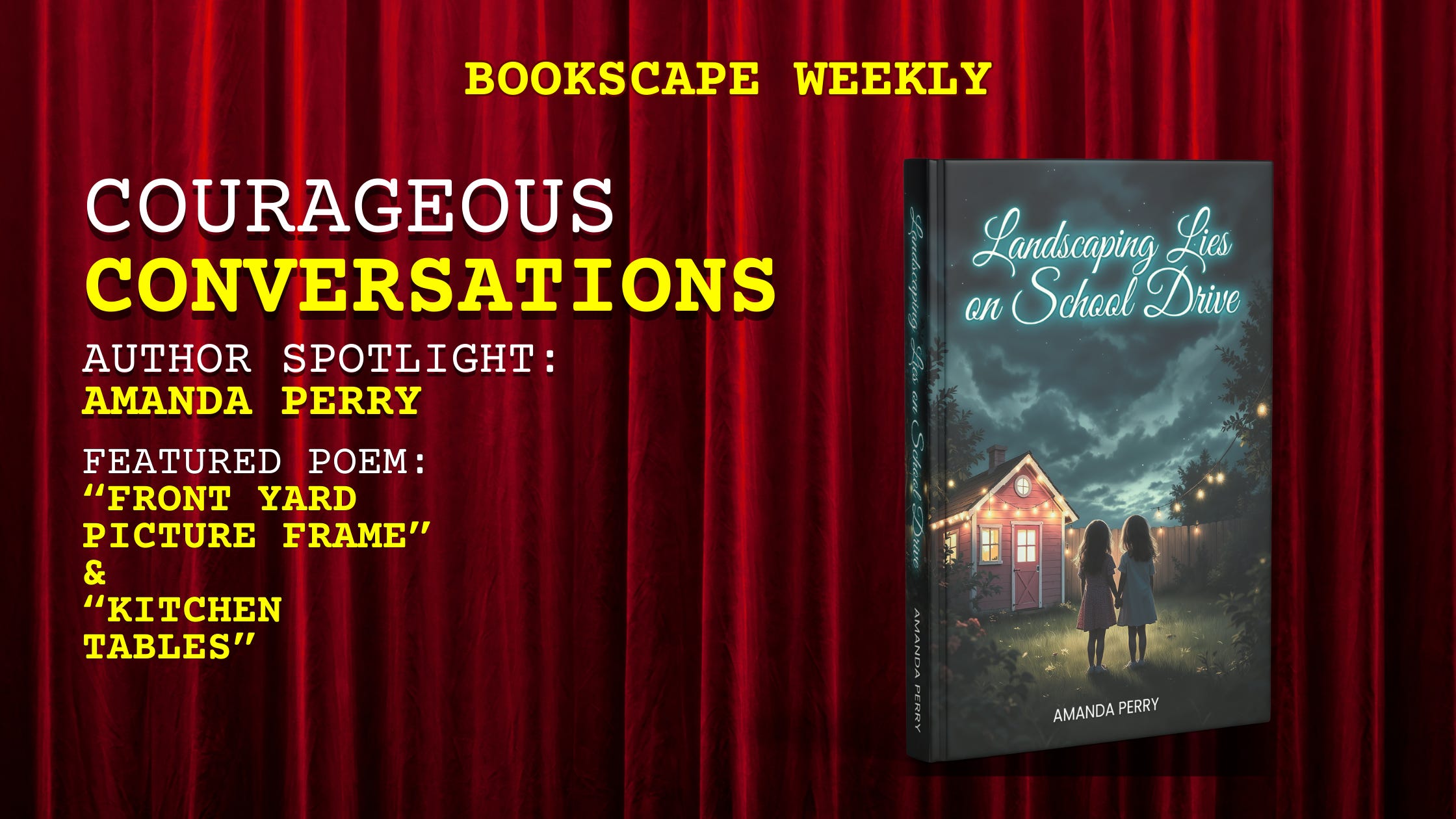
In our final week spotlighting Amanda Perry’s Landscaping Lies on School Drive, we shift from personal reflection to collective action. Amanda’s journey has never been just about surviving — it’s about reshaping the conversation around domestic abuse, one poem at a time.
Beyond the Fence Line
“Front Yard Picture Frame” is one of Amanda’s most symbolic pieces — a poetic indictment of appearances. A manicured lawn. Perfect flowers. A white picket fence. All the visual cues of a peaceful suburban life.
But Amanda pulls back the curtain.
Behind the carefully landscaped scenes lies a truth too many live with and too few discuss: abuse doesn’t always come with bruises in public. It often hides in plain sight.
“Don’t you know you need to water us too?” her daughter once asked — a line that didn’t just spark the poem, but shattered the illusion that everything was fine.
This poem invites us to reexamine the stories we’re told — and the ones we tell ourselves.
The Table That Held It All
In “Kitchen Tables,” Amanda uses a familiar piece of furniture to anchor one of her most painful memories — a scene of violence, silence, and ultimately, departure.
A table meant for homework, dinners, and birthday cake became a site of control and fear. It’s here that her abuser lashed out. It’s here she shielded her children. And it’s here that Amanda made the difficult decision to leave.
“I loved my kitchen table. But I couldn’t bear to see it anymore.”
This poem, like so much of Amanda’s work, transforms a physical space into emotional terrain. And for many readers, it resonates because they’ve sat at a similar table.
A Personal Mission Turned Public
Throughout her spotlight with Bookscape, Amanda Perry has shown what it means to write not just for healing, but for others. She’s become an advocate — pointing readers to shelters, hotlines, and local resources. Her desire to restart her nonprofit and host expressive writing workshops reveals a next chapter that isn’t just literary — it’s transformational.
Amanda’s message to survivors is simple, urgent, and unwavering:
“If it’s hurting you — leave. Get help. You are not alone.”
What Comes Next
Amanda’s story is far from over. She’s already planning her next body of work and considering new forms of outreach, including webinars and virtual readings.
If her poetry has moved you, shared resonance, or helped spark a conversation, don’t stop here. Share it. Speak it. Support others. And remember: poetry can be protest. Survival can be art. And healing is always possible.
If you or someone you know is experiencing domestic violence, visit thehotline.org or call 800-799-SAFE (7233).
Your safety is not negotiable. Your voice is powerful. You are not alone.